The Jackbox Party Pack 3
- 3.6
- Rating
- 10.00K
- Installs
- $24.99
- Price

 Analysis by App-foxy
I found The Jackbox Party Pack 3 most enjoyable when I treated it as a social activity rather than a conventional mobile game. It is a trivia-focused party collection from Jackbox Games, Inc., built around the idea that the main screen shows the action while players use their phones or tablets to participate. That setup makes it a particularly good fit for a living room, a casual gathering, or an evening when everyone wants to play together without learning a complicated control scheme.
My overall view is positive, but it comes with an important qualification: this is not a game I would choose for solitary play or for a group that wants a deep, competitive trivia experience. Its real strength is the conversation around the questions, the quick reactions, and the silly answers people create when they know their friends are watching. If your group enjoys improvising and laughing at its own mistakes, this pack can be remarkably effective. If nobody wants to speak up or use a phone as a controller, much of its appeal disappears.
Why the party format works so well
The cleverest part of the design is the division between the shared display and the personal device. Instead of passing around a controller, each person joins with a phone or tablet and uses that screen to respond. I found this more natural than traditional local multiplayer controls because everyone can look at the main television or monitor while keeping their own choices private when the game calls for it.
You May Also Like

 AccuWeather: Weather Radar
AccuWeather Review: A Quick, Clear Forecast for Everyday Decisions
For everyday plans, the best forecast is the one you can understand quickly. AccuWeather makes rain timing, radar, and local conditions easy to act on, with a few trade-offs.

 Hill Climb Racing
Why Hill Climb Racing Still Turns Crashes Into One More Run
A tiny car, a bumpy hill and one more upgrade: Hill Climb Racing keeps resurfacing because its simple chaos makes every near-miss feel personal.

 AliExpress - Shopping App
AliExpress Makes Global Shopping Feel Personal, but Shoppers Bear the Risk
AliExpress turns a global marketplace into a pocket-sized discovery engine. Its reach is useful, its shopping loop compelling, and its trade-offs easy to miss.

 Lords Mobile: Kingdom Wars
Lords Mobile Is a Kingdom-Building Routine, Not a Quick Match
A case-by-case verdict on the building, battles, device demands, and social commitments that make Lords Mobile rewarding for some players and exhausting for others.

 PDF Scanner app - TapScanner
TapScanner Makes Paperwork Easier to Capture, Check, and Share
TapScanner makes scanning with a phone feel less like a rescue operation and more like a dependable step in getting work done. Its capture tools are useful, though not flawless.

 Block Blast!
 Shows How Much a Puzzle Game Can Leave Out
A quiet grid game shows why puzzle players increasingly value instant clarity, repeatable skill and low-pressure play—and where the genre still needs to catch up.
More From Our News Desk
View All News


That arrangement also changes the mood of a trivia session. A normal quiz often rewards the person who already knows the most facts. Here, the entertainment comes from a mixture of knowledge, timing, bluffing, and understanding the people around you. A confident answer can be funny even when it is wrong, while a deliberately strange response may become the moment everyone remembers later.
The collection contains five party games, so it is not limited to a single question format. That variety matters during a longer gathering. One activity may suit the loudest people in the room, while another gives quieter players a better chance to contribute. I liked being able to change the rhythm instead of forcing everyone through the same kind of quiz until attention faded.
In practical terms, the phone-based control scheme lowers the barrier to entry. A guest does not need to understand a gamepad layout or remember a set of buttons. They can follow the prompts on their own device and watch the shared screen for the wider context. This makes the pack approachable for mixed groups where some people play games regularly and others normally avoid them.
There is also a useful social advantage to keeping answers on personal devices. Players can make choices without immediately revealing them to the room, which helps preserve surprise. That is especially valuable in games where the humor depends on guessing what another person wrote or selected. The device is not merely a replacement controller; it supports the structure of the jokes and reveals.
What I noticed during a typical evening
Imagine a small group meeting after dinner. Nobody wants to organize a tournament, read a rulebook, or spend half an hour learning a complicated system. One person starts the game on the shared screen, everyone joins with a phone, and the first round begins. Within minutes, the group is reacting to answers rather than discussing how to play. That quick transition is one of the strongest reasons to consider this pack.
The best moments do not necessarily come from the person with the highest score. They come from a friend recognizing someone else's writing style, a deliberately safe answer being exposed as completely wrong, or a ridiculous choice receiving unexpected support. I appreciated that the social reward is not reserved for the most knowledgeable participant. A player who enjoys wordplay or reading the room can remain involved even without dominating the factual questions.
For a family gathering, I would still consider the personalities involved before starting. A group that enjoys teasing one another can get a lot from the format, but a very competitive group may need to agree that the jokes matter as much as the result. The game can encourage playful rivalry, yet the same openness can make a sensitive player uncomfortable if the room turns every answer into a personal joke.
The Teen content rating is worth keeping in mind when deciding who joins. I would not assume that every round is suitable for young children simply because the controls are easy. The tone is aimed more at older children, teenagers, and adults, and the social humor works best when the audience understands that it is a party game rather than a formal educational quiz.
More than a simple knowledge test
Calling it a trivia game is accurate, but it does not fully explain the experience. I found that success depends on several kinds of judgment. You may need to decide whether a safe answer is better than a funny one, whether a strange response will make the group laugh, or whether you can predict what another player will choose. Those decisions give the pack more personality than a standard question-and-answer app.
This is also why replay value depends heavily on the group. The underlying activities can be revisited, but the people in the room change the outcome. A familiar game may feel different with close friends than with coworkers or relatives because the humor, assumptions, and willingness to take risks all shift. In my experience, that human variation is more important than simply having a large number of separate modes.
One useful approach is to rotate who hosts the session. The person starting the game can help new players connect their devices and explain the basic flow, but they should not become the permanent organizer. Sharing that responsibility keeps the evening from feeling like one person is managing an event for everyone else. It also makes the pack easier to bring out spontaneously.
The friction you should expect
The phone-as-controller idea is convenient, but it is not completely effortless. Every participant needs a compatible device available and enough confidence to connect it before the fun begins. If someone has a flat battery, a poor connection, or simply does not want to use their phone during a social gathering, the setup can slow down the start.
I would prepare the main screen before inviting everyone to join. Having the game already open, keeping the devices nearby, and deciding who will explain the first round removes much of the awkward waiting. This is a small workflow change, but it makes a noticeable difference because party games live or die by their momentum. The less time spent troubleshooting, the sooner the group starts reacting to one another.
The pack is also a paid purchase at $24.99, so the value question is different from that of a free trivia app. I would not buy it expecting a quick solo distraction. Its value is strongest when the same household or social circle will actually gather around it more than once. For a single occasional event, the price may feel harder to justify than a lower-cost quiz app, particularly if the group is uncertain about the format.
Its average rating is 3.6 from 24 ratings, while the game has 7 written reviews. I would read that as a reminder to judge the format against your own group rather than expecting universal approval. A party collection can be excellent for one circle and awkward for another because the quality of the experience depends so much on participation, humor, and willingness to engage.
Where it compares well with ordinary trivia apps
Most mobile trivia alternatives are designed around individual progress, timed questions, leaderboards, or repeated attempts to improve a personal score. Those games can be better when I want a quiet activity on my own or when I prefer a clear knowledge challenge without conversation. They are also easier to start because one person can open the app and play immediately.
This collection takes the opposite approach. It turns the shared screen into the center of attention and makes the group itself part of the content. That gives it a stronger party identity than a typical quiz app. I would choose it over a standard trivia title when the goal is to get people talking, especially if the players already know one another well enough to appreciate personal jokes and unexpected answers.
On the other hand, a dedicated trivia app may be the better choice for someone who wants a serious test of knowledge, a longer-term progression system, or a session that works equally well alone. This pack does not replace that kind of experience. Its questions and activities are supporting the social event, not creating a study tool or a personal training routine.
It also differs from board games that use physical cards or pieces. The digital format reduces the amount of preparation and keeps scoring and prompts on the main display, but it removes some of the tactile feeling of a tabletop game. If your group enjoys handling cards, setting up a board, and taking turns in a slower rhythm, a physical party game may feel more satisfying.
Small choices that improve the experience
My first practical tip is to choose the group before choosing the activity. Do not assume that the most competitive or knowledge-heavy option will be the best opener. Start with something that lets everyone understand the phone controls and the tone of the evening. Once people are comfortable writing or selecting answers, the more revealing activities become easier to enjoy.
Second, give players permission to be entertaining rather than perfect. The pack is at its best when people do not treat every answer as an exam. A friend who normally avoids trivia may become one of the most memorable players if they feel free to take a creative risk. That is a meaningful strength, because it broadens participation beyond the person who always wins conventional quizzes.
Third, watch the pace of the room. If everyone is still laughing and discussing answers, continue. If people are checking messages or drifting into separate conversations, change the game or stop for a break. The collection encourages variety, but it cannot manufacture attention. Treating it as a flexible part of the evening works better than insisting on finishing every activity.
Finally, keep the shared screen visible to everyone and avoid placing the person who is hosting in a position where they cannot see the room. The humor often comes from immediate reactions, not just the final result. A good viewing arrangement helps players notice those reactions and makes the phone controls feel like part of a shared event rather than a private mobile session.
Who should buy it, and who should skip it
I would recommend this game to friends who regularly host casual gatherings and want something that can involve people with different levels of gaming experience. It is particularly suitable for groups that enjoy wordplay, playful embarrassment, and making their own answers part of the entertainment. The low-complexity controls make it a sensible choice when not everyone owns a console controller or wants to learn a new interface.
It can also work well for a household that wants a reusable activity for visitors. The install count is over 10K, which suggests that it has reached a modest audience, but I would not use that figure as the main reason to choose it. The important question is whether you have a reliable group of people who will actually gather around the same display and participate with their phones.
I would skip it if your main goal is solo trivia, serious factual practice, or a quiet game that can be played in short private sessions. I would also hesitate if your group dislikes being put on the spot or tends to become uncomfortable when answers are shown to everyone. In those situations, a conventional quiz app or a more structured board game would probably be a better match.
There is one more audience distinction worth making. People who enjoy party games but dislike improvisation may find some of the appeal frustrating. The collection asks players to bring personality into the room; it is not simply a neutral test where the correct answer carries all the excitement. That is a strength for expressive groups and a weakness for players who prefer predictable rules and measurable mastery.
Technical details and long-term value
The game was released on Oct 20, 2016, and its current version is 1.1.3. It supports a minimum operating system of 4.0, which makes the stated compatibility range broad, although the real-world experience still depends on the devices people bring and the shared display used for the session. I would check the setup on the intended screen before planning a large gathering, rather than discovering a connection issue after everyone arrives.
The Teen rating and the social nature of the pack also mean that the host has a role beyond pressing start. I would decide in advance who is comfortable playing, explain that answers may become part of the joke, and avoid inviting people who would feel pressured to perform. That simple bit of preparation protects the relaxed atmosphere that the game needs.
Long-term value comes from the people you play with, not from treating the software like an endless solo library. If you have several groups of friends, it can stay fresh because each group creates different reactions and strategies. If you only expect to play once, the purchase becomes less compelling. I see it as a reusable social tool rather than a daily app.
After spending time with it, I think the strongest case for The Jackbox Party Pack 3 is its ability to turn ordinary trivia into a shared performance. The five-game structure gives a gathering room to change direction, the personal devices make participation simple once the setup is ready, and the humor comes from the players rather than from a forced presentation.
My reservation is just as clear: the game cannot carry an unwilling group. The price is meaningful for something that depends on several people being present, and the phone-based setup introduces a little preparation before the first laugh. It is also not the right replacement for a solo quiz, a serious knowledge challenge, or a traditional tabletop experience.
For the right audience, though, I would recommend it. Choose it for a relaxed gathering where people are happy to answer quickly, take a few risks, and laugh at the results. Skip it when you need private play or strict trivia competition. In my view, that specific social fit is what makes this party game worth considering: it succeeds less as a test of what players know than as a way to reveal how they think when their friends are watching.
FAQs for The Jackbox Party Pack 3
01What is The Jackbox Party Pack 3, and what games are included?
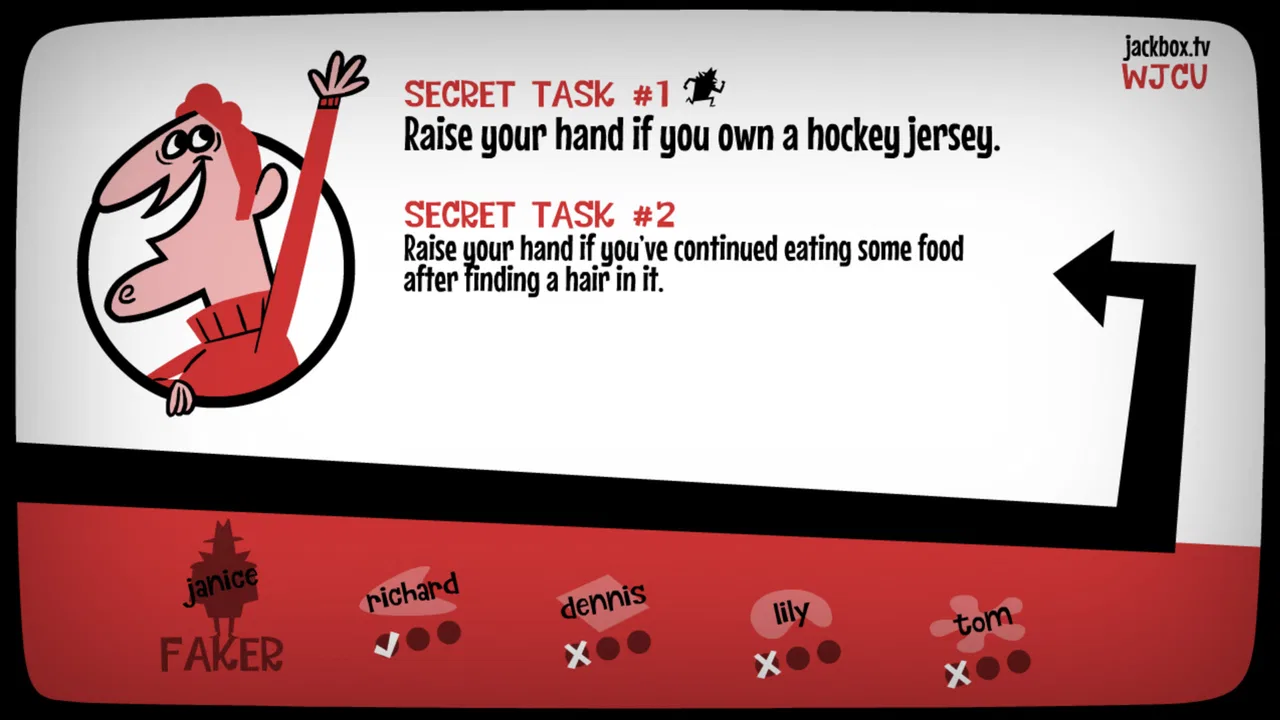
The Jackbox Party Pack 3 is a collection of five party games designed for groups, including Quiplash 2, Trivia Murder Party, Guesspionage, Fakin’ It, and Tee K.O. Each game offers a different style of entertainment, from comedy and trivia to drawing and social deduction. Only one person needs to own the pack, while other players join using their phones or tablets as controllers.
02Can I play The Jackbox Party Pack 3 with friends who do not own the game?
Yes. The game is designed so that only the host needs to purchase and launch The Jackbox Party Pack 3. Other participants can join through a web browser by visiting the Jackbox Games joining website and entering the room code displayed on the host’s screen. Players generally do not need to download the full game, although everyone must have a compatible device and a reliable internet connection.
03Is The Jackbox Party Pack 3 available as a native Android or iOS app?
Availability depends on the platform and store region. The Jackbox Party Pack 3 is primarily released for supported gaming platforms and computers, while mobile devices are commonly used as controllers through a browser rather than running the complete game locally. Before downloading, check the official store listing and device requirements carefully, because purchasing a mobile controller app is not the same as purchasing the full party pack.
04How many people can play The Jackbox Party Pack 3, and is it suitable for families?
The player limit varies by game, but the pack generally supports several active players, with additional participants often able to join as audience members. It works especially well for game nights, parties, and remote gatherings. However, some jokes, prompts, and themes may be mature or suggestive, particularly in Quiplash 2 and Trivia Murder Party, so parents should review the content before playing with younger children.
05Does The Jackbox Party Pack 3 require an internet connection?
The host usually needs an internet connection to launch or stream the game and to let other players join the room. Participants connect through their phones, tablets, or computers using a browser, so they also need access to the internet. Performance depends on the host device, network stability, and screen-sharing setup. For remote play, a video-conferencing service may be needed in addition to the game itself.
Pros
- Supports large groups
- making it ideal for parties and family gatherings.
- Players can join using smartphones without installing a separate mobile app.
- Mini-games offer varied formats
- from trivia and drawing to bluffing.
- Audience participation keeps eliminated or waiting players involved.
- Simple rules make most games easy to learn within a few minutes.
Cons
- Requires a host device connected to a TV or shared screen.
- Some games depend heavily on English wordplay and cultural references.
- Only the host needs to purchase the pack
- which may limit accessibility.
- A stable local internet connection is needed for smooth phone-based play.
- Replay value can decrease once players know the prompts and answers.

The Jackbox Party Pack 3
Gallery